
Under heavy-duty conditions in mining stripping, water conservancy cofferdam construction, and roadbed engineering, the Komatsu D375 heavy-duty tracked bulldozer serves as the core operating equipment, enduring long-term impact loads and continuous operation. Hydraulic components are constantly subjected to high pressure, leading to rapid wear and tear on parts. During maintenance and repair, technicians often focus on checking the engine, blade, and final drive, but easily overlook the **195-40-00900 steering valve assembly**-Bulldozer Spare Parts. The **195-40-00900 steering valve assembly** is the main control component of the steering hydraulic circuit, regulating the oil pressure and flow to the left and right steering clutches, directly controlling the machine’s steering action. A malfunction can cause delayed steering response, insufficient steering power on one side, and in severe cases, steering failure, leading to downtime, lost work time, and high repair costs.
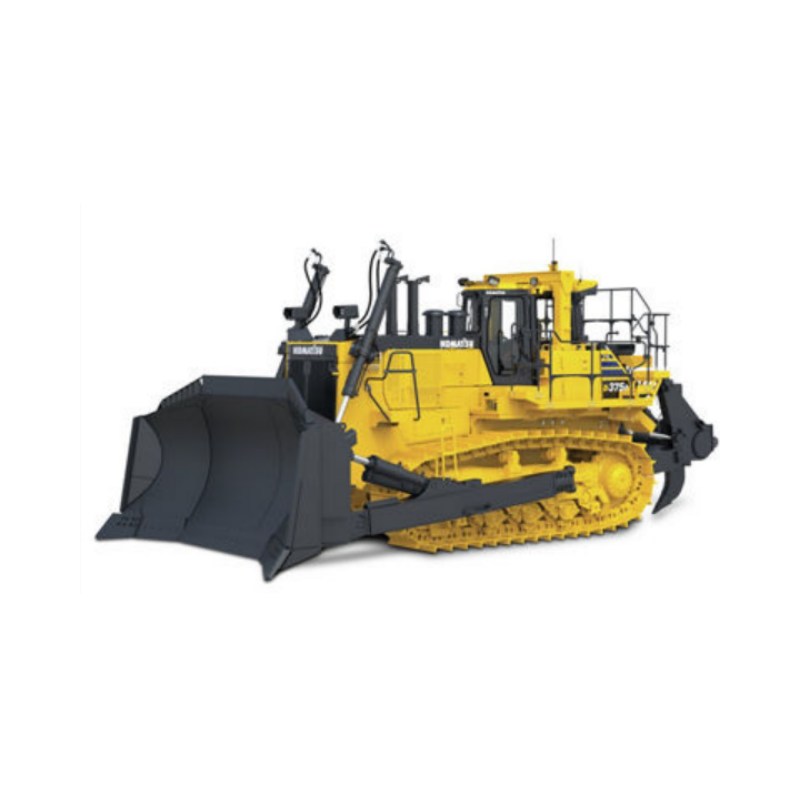
I. What is the steering valve assembly (195-40-00900)?
195-40-00900 is the original hydraulic valve component for the steering hydraulic system of Komatsu D375 series bulldozers. This component is integrated into the steering hydraulic circuit of the whole machine and is responsible for the distribution of pressure oil and the control of the left and right steering clutches. It is the core control unit of the track differential steering system.
The D375A-3 model adopts a tracked differential steering structure, which differs from wheeled vehicles that rely on a steering wheel and front axle for steering. Instead, it uses the speed difference between the left and right tracks to complete the steering action. When the operating mechanism triggers the control lever command, the pilot hydraulic medium is first sent to this steering valve assembly, and then through the oil passage inside the valve body, the pressurized oil is delivered to the steering clutch or brake actuator on the corresponding side, thereby controlling the power supply to one side of the track.
II. Structural composition and function of the 195-40-00900 steering valve
The steering logic of tracked bulldozers differs fundamentally from that of wheeled equipment such as trucks and wheel loaders. Wheeled equipment relies on adjusting the tire angle to turn, while the D375 large bulldozer cuts off the travel power on one side and relies on the continuous rotation of the other track to complete the steering. The steering valve assembly (195-40-00900)-Komatsu Bulldozer Parts is composed of multiple precision hydraulic parts. The valve body serves as the base, internally machined with oil inlet, return, left/right steering, and brake control oil passages. The valve core (spool valve) is the core moving component; a small movement can change the direction of oil flow, controlling the bulldozer’s left or right turn. A return spring returns the valve core to center after operation, preventing the equipment from veering off course. The safety valve, also known as the relief valve, limits the system’s maximum pressure, preventing impact loads from damaging the cylinders and pipelines. A one-way valve with a damping orifice prevents hydraulic oil backflow, buffers impact, and eliminates abrupt or jerky steering feel. When the operator pulls the steering lever, the pilot hydraulic circuit sends a command to move the valve core. The valve body switches the hydraulic circuit, delivering pressurized oil from the hydraulic pump to the left or right steering clutch cylinder. The clutch on the supply side disengages, cutting off power to the track on that side, and the bulldozer turns accordingly. In sharp turns, stationary turns, or slope operations, the valve assembly also coordinates with the braking circuit to prevent track slippage and loss of equipment control. Releasing the lever returns the valve core to its neutral position under spring thrust, cutting off pressurized oil to the clutch, restoring synchronous operation of both tracks, and keeping the equipment traveling in a straight line. The neutral position accuracy of the valve core is crucial. Even a slight misalignment of the valve core can easily lead to malfunctions such as slight steering after releasing the lever, deviation on flat ground, and overheating due to slippage of one clutch.
III.195-40-00900 Steering valve assembly Common Faults
If the following phenomena occur, it is highly likely that the steering valve assembly itself is stuck, leaking internally, or has failed to seal.
The first type is sluggish steering response. The lever has moved, but the machine takes one or two seconds to start veering. This is usually caused by a stuck valve core, contaminated hydraulic oil, insufficient pilot pressure, or gum deposits in the valve chamber.
The second type is weak steering on one side. For example, turning right is very easy, but turning left always feels like it’s “biting” and won’t move. This is often due to wear on the oil passage, uneven wear of the valve core, or oil leakage in the clutch cylinder.
The third type is when the machine veers to one side even without the lever engaged. The road surface is flat, the blade is straight, and the tracks are tensioned without any problems, but the D375 still slips to one side. This is most likely due to inaccurate valve core return, fatigue of the return spring, or unbalanced pressure in the left and right oil circuits.
The fourth type is external oil leakage from the valve body. Oil leaks out from the end cap, oil port, or valve body mating surface, which is generally caused by aging seals, uneven bolt torque, or pinholes in the valve body.
The fifth type is a heavy control lever. The driver clearly feels that it is “more difficult to pull than another vehicle.” This could be due to an overly tight valve core, incorrect hydraulic oil viscosity, deformation of the linkage mechanism, or blockage of the damping orifice inside the valve. The sixth type is sudden steering failure. This is the most dangerous situation and is commonly caused by valve body cracks, the main oil inlet being blocked by foreign objects, or the spool valve becoming stuck after long-term system contamination.
If the steering still pulls to one side after you’ve just replaced the steering clutch disc, or if the steering is still soft after you’ve added oil, bled air, and adjusted the steering, don’t repeatedly disassemble the final drive. Instead, focus on the cleanliness of the steering valve assembly, the valve core clearance, and internal leakage testing.
VI. Disassembly and Maintenance: Doing the details right will extend the product’s lifespan.
Replacing the 195-40-00900 steering valve assembly-Part Komatsu may seem like a simple process of “removing pipes, removing bolts, installing a new valve, and tightening bolts,” but most cases of on-site problems arise from the details.
Before disassembly and assembly, the equipment must be shut down and the hydraulic system pressure completely released; operation under pressure is strictly prohibited. All oil pipes should be immediately sealed after removal to prevent dust and metal shavings from entering the valve chamber. It is recommended to take photos first and then number each oil pipe, because if the steering hydraulic lines of the D375 bulldozer are connected incorrectly, it’s not just a matter of “slower steering,” but could result in the steering direction being opposite to the intended operation. After removing the old parts, check the markings or labels on the original parts: is it 195-40-00900 or 195-40-00901-Part Komatsu? Then, check the part number range provided by the customer to confirm whether interchangeability is allowed.
During installation, the valve core, valve bore, and O-ring contact surfaces should be coated with clean hydraulic oil of the same brand. Waste engine oil should not be used, and the inner bore should not be rubbed with cotton yarn. Bolts must be tightened in a crisscross and step-by-step manner according to the order specified in the Komatsu service manual. Many leakage problems are not due to poor seal quality, but rather uneven stress on the end cap causing deformation of the mating surfaces. It is strictly forbidden to strike the valve body with a hammer, and it is also strictly forbidden to enlarge holes, modify oil ports, or add shims for the sake of “easier assembly.”
After putting a new valve into use, do not immediately operate it at full load. First, let it idle for more than ten minutes to allow the hydraulic oil to circulate and bleed in the steering circuit. Then, try turning left and right several times to observe whether the valve core can return to center smoothly, whether the machine can maintain straight-line travel, whether there is oil leakage at the pipe joints, and whether the control lever is stuck.
In terms of routine maintenance, the hydraulic oil tank breather valve, steering system filter, and return oil filter should not be neglected. Many steering valves become stuck early on, not because of the valve itself, but because the system fluid is so dirty that its NAS cleanliness level is substandard. It is generally recommended to replace the hydraulic oil filter according to the manufacturer’s maintenance schedule. In dusty environments, continuous loading, or rocky conditions, the oil change interval should be appropriately shortened.
The 195-40-00900 steering valve assembly-Part Komatsu is the core control valve of the Komatsu D375 bulldozer’s steering hydraulic system, determining steering response and overall straight-line stability. In high-dust, continuous heavy-load conditions in mines, the valve body is subjected to alternating high pressure for extended periods, inevitably leading to valve core wear, jamming, and leakage. Implementing standardized maintenance, keeping the hydraulic circuit clean, and maintaining hydraulic oil cleanliness can delay valve core wear and reduce the probability of failure. If the equipment exhibits weak steering, deviation, valve core jamming, or valve body leakage, stop the machine immediately for diagnosis to avoid damaging the steering clutch. For spare parts replacement, prioritize the 195-40-00900 steering valve assembly, as its assembly dimensions and calibration parameters are compatible with the Komatsu D375, requiring no pipeline modifications, ensuring stable operation of the steering hydraulic system, and reducing equipment maintenance costs.
For other parts, please provide us with the part number or visit our related websites:
Click here to visit our spare parts web
Click here to visit our alibaba (There are more kinds of products)
Post time: Oct-16-2026