
In the routine maintenance and parts replacement of 5-ton wheel loaders, the bucket cylinder is a typical high-frequency wear component. The bucket’s tilting action relies entirely on it, and during operation, the high reciprocating frequency and heavy load cause the seals and piston rod to be under constant high-pressure friction. Over time, leaks, slowed operation, and even cylinder scoring are not uncommon. This is especially true for classic models like the XCMG ZL50G and ZL50GL, which have a large market presence and high operating rates, often running for over ten hours straight, placing even higher demands on the durability of the bucket cylinder. A stable, properly sized bucket cylinder directly affects whether the equipment can withstand high-intensity continuous operation—incorrect selection or substandard quality can lead to anything from sluggish operation and incomplete unloading to frequent shutdowns for parts replacement, delaying work schedules and increasing maintenance costs.
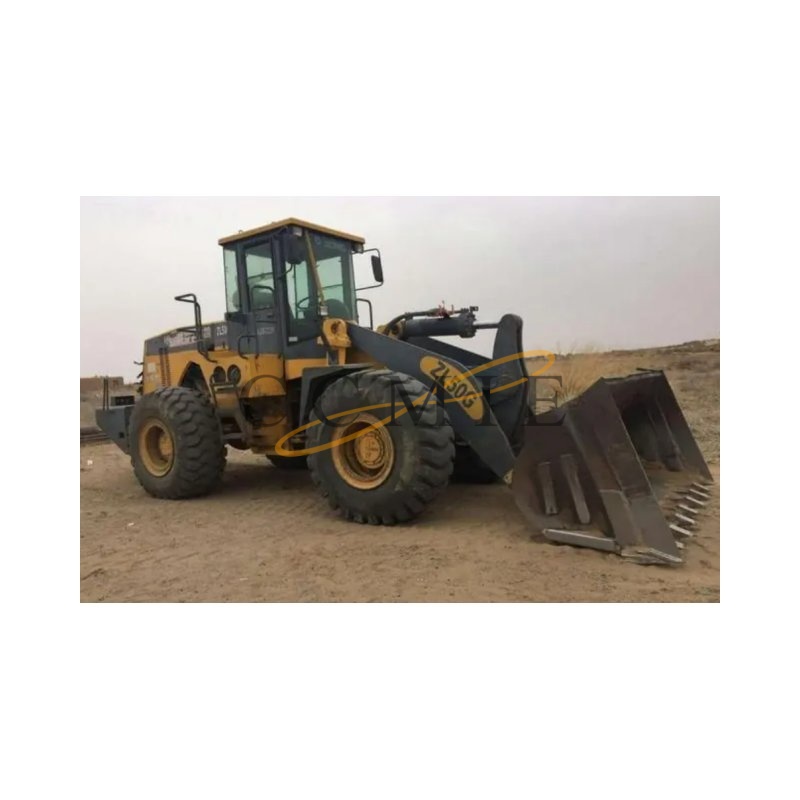
I. The role of the 252100553 bucket cylinder in a loader
The complete operation of a loader’s working device relies on the precise coordination of the boom cylinder and the bucket cylinder. The boom cylinder controls the overall lifting and lowering of the bucket, determining the working height and unloading radius; the bucket cylinder specifically regulates the bucket’s tilting angle and is the core power component for completing material scooping, holding, and unloading. The bucket cylinder, through the extension and retraction of the piston rod, drives the boom and linkage mechanism, performing multiple key functions in a complete work cycle: when scooping material, the piston rod retracts, pulling the bucket upwards, and the linkage mechanism’s force-amplifying effect securely scoops the material into the bucket; during transport, the cylinder maintains pressure to lock the bucket angle, preventing material spillage along the way; upon reaching the unloading point, the piston rod quickly extends, pushing the bucket forward to achieve efficient unloading; after the operation is completed, the bucket is lowered back to level, preparing for the next cycle.
II. Structural Features and Performance Advantages of the 252100553 Bucket Rotary Cylinder
The 252100553 bucket cylinder adopts a double-acting hydraulic cylinder structure with a compact overall layout and reasonable force path design. It can continuously and stably output the torque required for bucket tilting under heavy load conditions, and is the core power execution component of the loader’s working device.
As the core pressure-bearing component of the hydraulic cylinder, the cylinder barrel is made of high-strength seamless steel pipe. Its wall thickness has undergone rigorous mechanical calculations and operational verification, allowing it to withstand working pressures of 16–20 MPa for extended periods without deformation. The cylinder barrel’s inner bore undergoes precision honing, achieving a high standard of surface finish. This ensures a precise fit with the piston and sealing components, effectively reducing internal leakage, improving the volumetric efficiency of the hydraulic system, and resulting in faster bucket tilting response, stronger thrust, and a more compact operating rhythm.
Sealing performance is a core indicator of hydraulic cylinder reliability, directly determining the product’s actual service life. The 252100553 bucket cylinder employs a complete high-performance sealing solution. The main sealing component is made of wear-resistant and high-temperature-resistant high-quality materials, combined with guide rings, dustproof rings, and other multiple protective structures to form a complete sealing defense. Even in outdoor construction site environments with high dust levels and significant temperature fluctuations, it can maintain a stable sealing effect. This multi-stage sealing design not only prevents external mud and dust from intruding into the cylinder body, reducing abrasive wear on internal components, but also prevents high-pressure oil leakage, effectively extending the cylinder’s trouble-free operating time and reducing the frequency of on-site maintenance and labor costs.
The piston rod is a key component for the power output of the hydraulic cylinder. This product’s piston rod is electroplated with hard chrome and mirror-polished, resulting in a uniform plating thickness and high hardness, providing excellent scratch and corrosion resistance. In harsh working environments such as those with stone or sand, it is less prone to scratches and rust, and also avoids surface damage that could scratch the seals, indirectly extending the overall lifespan of the sealing system. The connecting lugs at both ends of the hydraulic cylinder are reinforced and stress-optimized, with high-precision machining of the pin holes and strong load-bearing capacity, capable of withstanding alternating impact loads during operation. Simultaneously, the inlet and outlet ports are rationally arranged to ensure accurate installation alignment and smooth hydraulic circuit flow, preventing increased oil temperature and energy loss due to localized throttling.
III. Compatible Models and Application Scenarios for 252100553 Bucket Rotary Cylinder
The 252100553 bucket cylinder is a standard original equipment hydraulic component from XCMG. Its installation interface, stroke parameters, and force design are all matched to specific machine models, allowing for stable operation without altering the original vehicle structure during installation. This cylinder is primarily used on the XCMG ZL50G and ZL50GL 5-ton wheel loaders, which have a rated load capacity of 5 tons, a standard bucket capacity of approximately 3.0–3.5 cubic meters, and a diesel engine power of approximately 162 kW (220 hp). The hydraulic system’s working pressure and flow parameters are perfectly matched to this cylinder. Whether used as a factory-installed component on new machines or as an aftermarket replacement for older equipment, the cylinder can be directly connected to the original machine’s working device without modification to the hydraulic circuit and hinge point structure, minimizing replacement costs and downtime.
In actual engineering, the ZL50G/ZL50GL loader equipped with the 252100553 bucket cylinder can handle a variety of bulk material operations, and its tipping performance is relatively stable under different working conditions.
In infrastructure and earthmoving projects, loaders are mainly used for loading and transporting sand, gravel, earth, and construction waste. Operations are frequent and continuous for extended periods. This hydraulic cylinder features a high-strength body and a durable sealing system, capable of withstanding high-frequency reciprocating and tilting impacts, ensuring continuous operation even during long construction periods.
In mines and quarries, the materials handled are mostly hard rocks and ores, resulting in significant impact forces during loading and unloading. The hydraulic cylinders must withstand instantaneous high-pressure loads. This hydraulic cylinder features reinforced lugs and a high-hardness piston rod, making it impact-resistant, wear-resistant, and reducing the risk of structural damage.
In commercial concrete mixing plants and aggregate yards, equipment must accurately feed aggregates, cement, and other materials, requiring high speed and positioning accuracy in bucket tilting. This hydraulic cylinder features low internal leakage, fast response, smooth bucket extension and retraction, and precise unloading, ensuring continuous material supply to the mixing production line.
Ports, logistics yards, and factory transshipment environments are characterized by high dust and humidity, and often involve bulk cargo stacking and loading. This hydraulic cylinder is equipped with multi-stage dustproof seals and corrosion-resistant chrome-plated piston rods, which can withstand environmental erosion and maintain its sealing performance and appearance lifespan even in complex outdoor environments.
IV. Key Points for Selecting and Identifying 252100553 Bucket Rotary Hydraulic Cylinders
First check the part number, then verify the dimensions.
Original part number 252100553 is the most accurate fit identifier. At the same time, you need to confirm the distance between the front and rear ears of the hydraulic cylinder, the total length of the piston rod, the outer diameter of the cylinder, the oil port specifications and the thread type one by one.
Judging quality by workmanship details
Qualified products have smooth and flat cylinder walls, uniform and full welds, and no porosity, slag inclusions, or incomplete welds; the chrome plating on the piston rod is bright and uniform, smooth to the touch, and burr-free; the seals have regular edges and corners, are elastic when pressed, and will not become brittle or hard.
Request warranty and factory certificate
Products from legitimate channels come with a certificate of conformity and pressure test records, and the warranty period and after-sales service details are clearly stated.
Consider the overall cost; don’t be greedy for short-term gains.
Inferior hydraulic cylinders often use thin-walled steel pipes, ordinary rubber seals, and low-end steel materials. They are cheap when purchased, but have a very short lifespan. Procurement should consider the long-term benefits, not just the price of a single purchase.
Select configuration based on actual working conditions
For equipment operating in high-dust, high-impact environments such as mines and quarries, it is recommended to prioritize versions with reinforced seals and thickened chrome-plated piston rods. While the purchase cost is slightly higher, the replacement cycle is significantly extended, making it more cost-effective in the long run.
V. Common Faults and Maintenance Suggestions for Bucket Rotary Cylinder 252100553
The 252100553 bucket rotary cylinder operates under high pressure and reciprocating motion for extended periods. Given the high dust levels and complex working conditions at construction sites, malfunctions are normal after prolonged use. The following are some common malfunctions and troubleshooting methods for your reference:
Oil leakage from the hydraulic cylinder
This is the most common problem, often occurring at the piston rod seal or oil pipe joint. It’s generally caused by worn or aged seals, scratches on the piston rod surface, or loose joints. If leakage is detected, first tighten the joint nut, clean it, and then check if the leak persists. Oil seepage at the rod end seal usually indicates seal failure; in this case, replace the entire sealing assembly. Before replacing the seal, inspect the piston rod surface; any obvious scratches or rust pits should be repaired or the piston rod replaced.
Weakness in flipping, slowed movements
The bucket’s loading and unloading speed has decreased significantly, and it may even be unable to tip over when fully loaded. First, measure the system pressure and check if the relief valve is set too low or if there is internal leakage. If the pressure is normal, it is most likely that piston seal wear is causing oil leakage between the high and low pressure chambers, resulting in reduced cylinder thrust. After confirming internal leakage, replace the piston seal. At the same time, check the inner wall of the cylinder for scratches or damage. If the inner wall is dull, simply replacing the seal will not be effective.
The hydraulic cylinder is not working or is stuck.
When the bucket tilts, the problems usually fall into two categories: one is a blockage in the hydraulic circuit, a dirty filter element, or a stuck directional valve core, resulting in poor oil flow; the other is insufficient lubrication, rust, deformation, or jamming at mechanical hinge points such as the bucket shaft and rocker arm linkage. During troubleshooting, first check the oil circuit and the cleanliness of the hydraulic fluid. If it is severely contaminated, change the oil and clean the system. Then, apply grease to each hinge pin and check for deformation or jamming, eliminating the problems step by step.
The movement is crawling and the running is unstable.
If a vehicle jerks and shakes during unloaded rotation, it’s usually due to air getting into the hydraulic system, or localized damage to the piston rod or uneven wear of the seals. You can try repeatedly performing a full-stroke unloaded rotation to bleed the air. If it still creeps after bleeding, then disassemble and inspect the guide sleeve seal and the piston rod surface. After addressing these issues, the vehicle should generally return to stable operation.
Piston rod bent, cylinder deformed
This type of structural damage is primarily caused by overloading, violent impact unloading, or lateral forces acting on the piston rod with it extended. Deformation will be accompanied by abnormal noises and oil leaks, and in severe cases, it can damage the connecting hinge points. This type of damage cannot be easily repaired; it is recommended to replace the entire cylinder assembly. At the same time, pay attention to proper operating procedures and avoid using the equipment roughly.
Performance decreases as oil temperature increases
Prolonged continuous operation in summer can cause hydraulic oil temperatures to rise excessively, leading to decreased oil viscosity and accelerated seal aging, resulting in slower operation and increased leakage. In such cases, first stop the machine to allow it to cool down, then check if the radiator is blocked and if the hydraulic oil level is normal. During daily operations, avoid prolonged full-load continuous operation and control the oil temperature to extend the overall lifespan of the seals and cylinders.
The 252100553 bucket cylinder is a core power component for the bucket operation of XCMG ZL50G and ZL50GL loaders. Whether the bucket can tip smoothly and unload cleanly largely depends on the condition of this cylinder. The quality of the selected parts and the level of maintenance directly affect the equipment’s operating efficiency and long-term operating costs. When purchasing, ensure you use original manufacturer part numbers, verify workmanship details, and use reputable warranty channels to avoid inferior parts from the source. Regular, standardized operation and periodic inspections are essential; promptly address any leaks or abnormal movements to prevent small problems from escalating into major malfunctions. With proper selection and maintenance, a single cylinder can operate stably for a long time, keeping the loader in good condition.
For other parts, please provide us with the part number or visit our related websites:
Click here to visit our spare parts web
Click here to visit our alibaba (There are more kinds of products)
Post time: Oct-31-2026