
In the original hydraulic spare parts system of Shandong Lingong 5-ton loaders, part number **4120007867**, the bucket cylinder (commonly known as the tipping cylinder or bucket cylinder assembly), is the core actuator of the L956F working device. This cylinder directly controls the entire bucket tipping process, directly determining the machine’s digging force, bucket filling coefficient, and unloading efficiency. It is an essential, easily damaged, and easily repairable part that must be readily available in high-load scenarios such as mining quarries, sand and gravel yards, and concrete mixing plants.
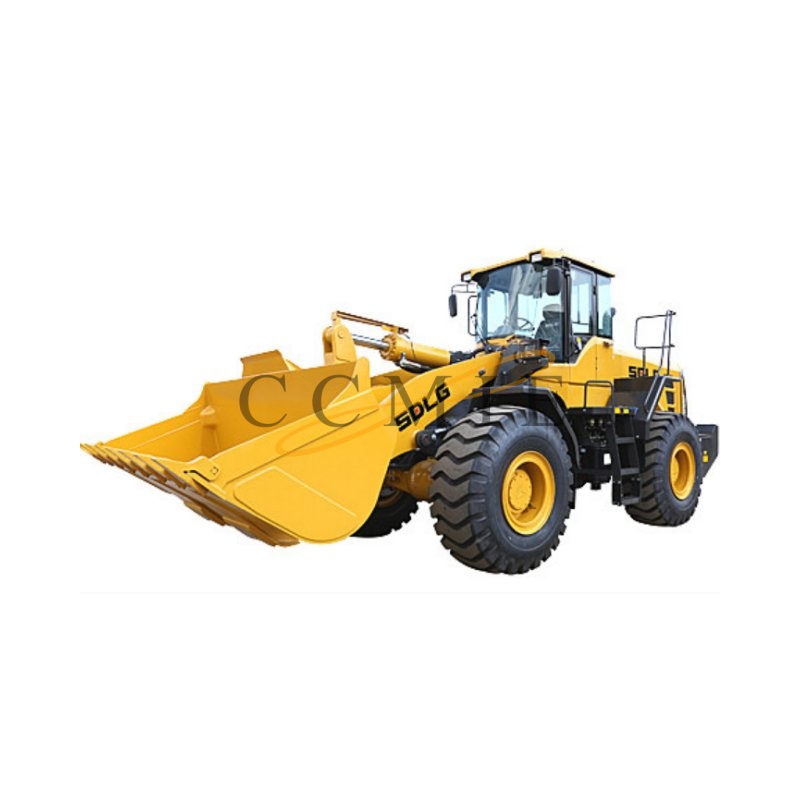
I. Product Introduction of Bucket Rotary Cylinder 4120007867
The Shandong Lingong L956F loader is a long-wheelbase, energy-saving 5-ton wheel loader equipped with a dual-pump confluence hydraulic system, balancing heavy-duty capacity and fuel economy. It is widely used in sand and gravel quarries, mine loading, and earthwork filling. The 4120007867 bucket cylinder is the original equipment manufacturer (OEM) bucket cylinder assembly for this loader. It works in conjunction with the boom cylinder to drive the bucket, jointly completing the material receiving, load holding, and unloading actions. The cylinder assembly includes a cylinder barrel, piston rod, piston, guide sleeve, complete set of seals, hinged support, and buffer structure.
The 4120007867 bucket cylinder is subjected to impact loads over a long period of time. The instantaneous loads from the bucket biting material, stone impacts, and full-load unloading all act on the cylinder body. Once internal leakage, piston rod scoring, or seal damage occurs, it will cause weak bucket retraction, bucket self-sinking, and unloading jamming, and in severe cases, it will directly stop the operation.
II. Functions and applications of the bucket rotary cylinder (4120007867)
The 4120007867 bucket cylinder is responsible for driving the bucket to tilt. It relies on the loader’s hydraulic system to provide pressure and works in conjunction with a linkage mechanism to complete the entire loading action. It primarily performs three tasks:
Tumbling and Bucket Retraction: The bucket cylinder retracts, pulling the bucket inward and folding it inward. Hydraulic torque cuts into the material pile and collects the material into the bucket, ensuring full loading. If the bucket cylinder experiences internal leakage, the scooping power will be insufficient, significantly reducing loading efficiency.
Bucket locking for load protection: When the bucket is fully loaded for transport, the angle of the bucket is locked by the sealing of the bucket cylinder and the valve assembly to prevent material spillage due to bumps on the road. If the oil seal of the bucket cylinder wears down or oil leaks inside, the bucket will slowly drop, wasting material and posing a safety hazard.
Tilting and unloading: The hydraulic cylinder extends, pushing the bucket forward to tilt and unload the material. The bucket tilting cylinder has built-in buffer structures at both ends, which slow down when it is close to the end of the stroke to reduce impact and protect the rocker arm, tie rod and pin and other connecting parts.
The 4120007867 bucket cylinder is also equipped with an overload safety valve. When a large rock blocks the bucket or the pressure suddenly spikes, the safety valve will automatically release pressure to prevent damage to the cylinder barrel and piston rod. When repairing the 4120007867 bucket cylinder, it is essential to check that the safety valve is functioning correctly.
III. Typical Application Scenarios of the 4120007867 Bucket Rotary Cylinder
The load, dust, and humidity vary greatly from construction site to construction site, and the parts of the hydraulic cylinder that are prone to problems and the symptoms of failure also differ. The inspection plan must be flexibly adjusted according to the site conditions.
Mining and hard sand and gravel quarry operations: These conditions involve strong impacts and flying debris, easily scratching the chrome plating of the hydraulic cylinder piston rod. High dust levels also contribute to dust buildup, which can seep into the dust seal along the piston rod, accelerating oil seal wear. Scratching and external leakage are common issues with the piston rod of the 4120007867 bucket rotary cylinder. A comprehensive inspection is recommended after 3000 working hours.
Mixing plant and aggregate storage yard operations: In these scenarios, loading frequency is high, and the bucket is frequently rotated. After cement and stone powder dry, they easily stick to the piston rod surface of the hydraulic cylinder. When the bucket cylinder extends and retracts, the hardened material constantly rubs against the oil seal lip, which easily damages the seal and causes oil leakage. This is a condition where the oil seal is consumed very quickly.
Coal yard and bulk cargo terminal operations: In these scenarios, loaders often operate continuously for extended periods. The docks are humid, and coastal areas are also subject to salt spray corrosion, making the piston rod and cylinder outer wall of the 4120007867 bucket cylinder prone to rust. Rust spots will continuously wear down the seals, gradually leading to internal leakage and shortening the cylinder’s service life.
Earthwork construction site operations: In such scenarios, the soil and silt are highly viscous, and the bucket is prone to uneven force when picking up materials. The 4120007867 bucket cylinder is easily subjected to lateral force. Over time, the piston rod of the 4120007867 bucket cylinder experiences severe wear on one side, resulting in uneven wear.
Operating in high and low temperature environments: In winter, the low temperature reduces the fluidity of hydraulic oil. In this scenario, the sealing strips of the 4120007867 bucket cylinder harden and lose elasticity, making it easy for oil to leak during startup. In summer, after being exposed to the sun, the hydraulic oil temperature remains high, accelerating the aging of the oil seals and significantly reducing their service life.
IV. Core Advantages of the 4120007867 Bucket Rotary Cylinder
Most generic replacement hydraulic cylinders on the market only replicate the external dimensions; their internal structure and manufacturing processes deviate significantly from the original factory specifications, resulting in durability far inferior to genuine parts. The genuine bucket cylinder (part number 4120007867), calibrated and matched with the Lingong complete machine hydraulic system, possesses multiple core advantages compared to generic imitation cylinders:
a. Precise matching of the entire machine, with no assembly interference.
The cylinder stroke, piston rod diameter, and hinge hole spacing at both ends strictly conform to the original L956F Loader drawings. The lever arm output and hydraulic thrust also fully meet the original design parameters. After installation, the bucket retraction and extension movements are smooth, without any issues such as movement jamming or interference between structural components, ensuring stable output of the entire machine’s hydraulic system.
b. Precision machining process, impact-resistant and wear-resistant
The cylinder barrel of the rotating bucket cylinder adopts a high-precision deep-hole honing process, and its inner wall roughness is strictly controlled within the standard range to reduce piston reciprocating friction; the piston rod of the 4120007867 rotating bucket cylinder adopts a double treatment of thickened base and hard chrome electroplating, with sufficient plating thickness, stronger resistance to stone impact and rust prevention, and significantly reduced probability of rod surface scratches.
c. Multi-layer composite seal, effectively suppressing internal leakage.
The 4120007867 bucket cylinder of Lingong L956F Loader adopts a multi-layered sealing structure, including a dustproof ring, guide ring, main oil seal, and piston seal. It can withstand high system pressure for a long time, effectively prevent internal oil leakage, and the entire seal is resistant to high pressure, oil, and temperature, eliminating bucket self-sinking failure and significantly extending the service life of the seal.
d. Buffering + welding reinforcement to reduce the risk of structural damage.
The 4120007867 bucket cylinder has built-in buffer structures at both ends, which can achieve throttling and deceleration at the end of the stroke, reduce the impact of unloading, and reduce the wear of the rocker arm, pin, and tie rod. The cylinder lugs are automatically welded by robots and non-destructive testing is performed after completion to eliminate residual welding stress and avoid weld tearing and cracking under heavy alternating loads.
Using original part number cylinders can effectively reduce abnormal wear of the machine’s working components and control overall maintenance costs in the long term. When purchasing spare parts, the part number 4120007867 of Shandong Lingong L956F Loader must be strictly verified; do not arbitrarily select non-standard substitutes.
If any of the following situations occur during operation, it indicates that the hydraulic cylinder has malfunctioned and needs to be repaired as soon as possible: the bucket is not strong enough to retract with material, the bucket drops on its own after the machine is stopped and left to stand still, oil is leaking from the piston rod, scratches or rust spots appear on the surface of the rod, and there is obvious impact noise when the bucket is flipped to the unloading position.
V. Replacement and Maintenance Recommendations
Most hydraulic cylinder failures are gradual and rarely sudden. Regularly monitoring the equipment’s operating status and addressing minor issues promptly can save on maintenance costs and prevent sudden equipment malfunctions that could delay construction progress.
If the following phenomena are encountered during operation, the machine needs to be stopped and inspected in time: the bucket is not retracting under load, the bucket falls down on its own after the machine is stopped and left to stand still, oil seepage at the piston rod position, scratches or rust spots on the rod surface, and obvious impact noise when the bucket is tilted to the unloading end point. These are all signals of abnormality of the 4120007867 bucket cylinder.
To extend the service life of the 4120007867 bucket cylinder, routine maintenance must be carried out properly.
Before starting each shift, inspect the piston rod for any bumps, damage, or oil leaks. Regularly lubricate the hinge pins with grease, as jamming of the pins can generate lateral force, causing uneven wear on the piston rod. Ensure the hydraulic oil is kept clean and replace the filter element on time, as impurities in the oil are a major cause of cylinder scoring and oil seal damage. Clean any cement or gravel clumps adhering to the piston rod surface promptly to prevent hard particles from scratching the oil seal during cylinder reciprocating movement.
When disassembling and replacing the hydraulic cylinder, it is imperative to strictly adhere to operating procedures, ensuring both operational safety and the protection of components. Before disassembling the 4120007867 bucket cylinder, ensure the bucket is safely placed on the ground and release any residual oil pressure in the pipeline to prevent injury from high-pressure oil spray. During hoisting and transportation, take precautions to protect the chrome plating of the 4120007867 bucket cylinder piston rod. When installing, align the piston rod with the hinge hole and avoid forcefully striking the pin. If the bushing is severely worn, it is recommended to replace it simultaneously; otherwise, the newly installed cylinder will continue to bear uneven loads and will quickly fail again, increasing maintenance costs. After assembly, first perform a no-load reciprocating telescopic cylinder operation to purge air from the cylinder. Then, gradually load the cylinder for a test run. Only after confirming there are no leaks, the bucket does not sink, and there are no abnormal noises should the machine be put into operation.
The 4120007867 bucket cylinder is a key component of the Lingong L956F loader’s working device. The bucket’s receiving, locking, and unloading tilting all rely on its stable hydraulic power output. In high-impact environments like mines and aggregate yards, seals, piston rods, and cylinder lug welds are the most prone to failure. A thorough inspection is essential before each operation to ensure safety. Furthermore, when purchasing spare parts, always verify the part number 4120007867 (bucket cylinder) to avoid using non-standard cylinders, which can increase future maintenance costs and delay project timelines. Regular inspections are crucial to keep the hydraulic oil clean. Address minor issues like oil leaks and bucket self-sinking promptly to delay cylinder damage, prevent serious failures like cylinder scoring and weld cracking, and minimize downtime.
For other parts, please provide us with the part number or visit our related websites:
Click here to visit our spare parts web
Click here to visit our alibaba (There are more kinds of products)
Post time: Oct-29-2026