
The XE215CA is one of XCMG’s more capable 20-ton mid-sized excavators, capable of handling earthmoving, municipal excavation, and road reconstruction. The 803007160 bucket cylinder is the hydraulic actuator that controls the bucket’s extension and retraction, completing the digging and unloading actions. It’s the core hydraulic component that drives the bucket’s tilting to complete the digging and unloading movements. These types of mid-sized excavators operate under high intensity, with the bucket cylinder repeatedly subjected to impact loads and working long hours in sand, gravel, and mud environments. Problems such as seal wear, cylinder oil leakage, and bucket slippage/lack of power are very common.
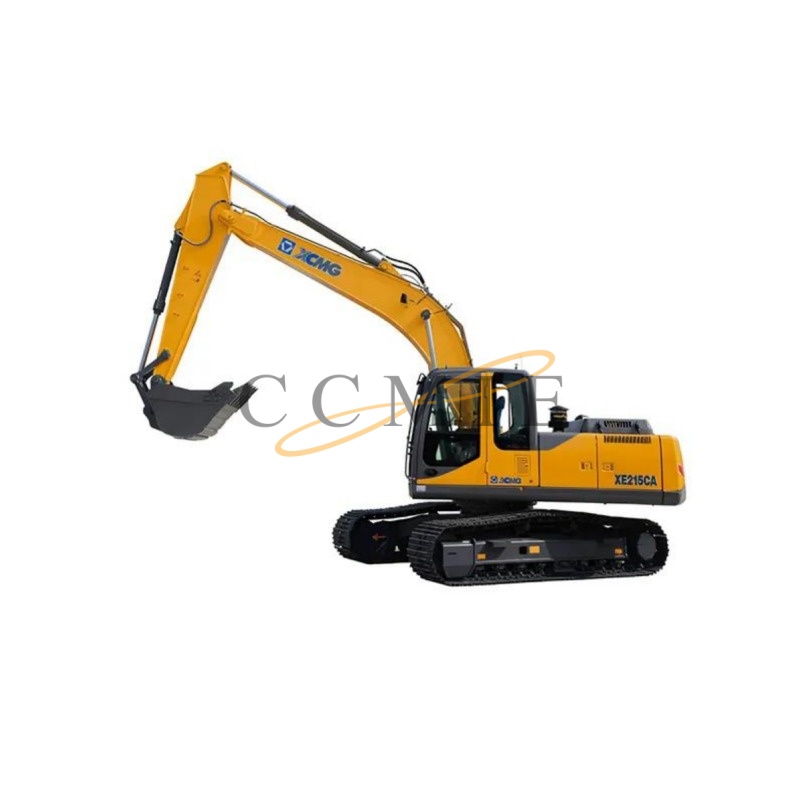
I. Main Features of Bucket Cylinder 803007160
This hydraulic cylinder is an original part specifically designed for the XCMG XE215CA cylinder excavator, not a generic replacement available on the market. Its function is straightforward: to push the bucket teeth into the soil, and then tilt the bucket to unload the material. When installed on a medium-sized machine, the hydraulic cylinder must withstand frequent heavy-load operations without being too heavy to affect the overall weight distribution and stability of the machine.
The excavator arm cylinder is made of high-strength seamless steel pipe, honed to a smooth inner wall, resulting in low resistance and uniform piston reciprocating motion. The piston rod is chrome-plated, which not only provides wear resistance but also rust prevention—the chrome plating protects the rod from most scratches caused by constant churning of mud and soil by sand and gravel. Internally, it is equipped with multiple sealing components, including a main seal and dust seals, specifically designed for the high-frequency extension and retraction of the bucket.
The stroke is strictly calibrated according to the XE215CA bucket linkage structure, ensuring that there will be no insufficient or excessive stroke after installation, and the bucket tilting angle matches the overall machine. This has a significant impact on the quality of operation: if the tilting angle is accurate, digging will be fast and unloading will be clean; if the angle is incorrect, each bucket will be filled with residual soil, and efficiency will naturally decline.
Before leaving the factory, the pressure test is completed, and the oil ports, threads, and connectors are all calibrated according to the parameters of the XE215CA hydraulic system. Once installed, they can be directly connected to the main unit’s oil circuit without any interface modifications. This is a practical advantage of using genuine parts: the interfaces and parameters are pre-matched, saving you the trouble of modification.
When purchasing replacement parts, model number 803007160 is the only way to identify this excavator hydraulic boom cylinder. The model and installation dimensions must be checked before ordering and installation. Many reworks stem from incorrectly installing other models, causing misaligned holes, requiring disassembly and reassembly.
II. Common Fault Phenomena, Causes, and Repair Suggestions
When operating under heavy loads on construction sites for extended periods, the 803007160excavator bucket cylinder factory of the XE215CA boom lift cylinder excavator is prone to various hydraulic failures.
Piston rod oil leakage is the most common fault. During operation, hydraulic oil adheres to the piston rod surface, and after wiping, it quickly seeps out again, sometimes even dripping. This fault is mostly caused by long-term high-frequency contraction and extension, leading to aging and wear of the main seal and dust seal. Minor leaks can be observed for a short period by keeping the rod clean; however, once it develops into dripping, it is recommended to replace the entire sealing assembly. If the leakage persists after replacing the seal, the chrome plating on the piston rod needs to be inspected. If scratches or rust pits are found, the rod should be repaired or the entire cylinder assembly should be replaced.
The bucket lacks digging power and sinks under heavy load. Insufficient digging force during excavation, coupled with a slow descent when fully loaded, affects digging accuracy. This problem is mostly caused by internal leakage due to damaged seals in the hydraulic cylinder, or possibly by a malfunction in the main control valve’s hydraulic circuit. During maintenance, first test the bucket’s sinking under no-load. If it sinks slowly, prioritize checking the hydraulic cylinder seals. If the sinking speed fluctuates abnormally, focus on checking the main control valve and hydraulic circuit. Never replace the hydraulic cylinder without testing, as this wastes parts and time.
The bucket tilting action is sluggish and the operating speed is slow. Intermittent and slow-responding movements during bucket tilting are mainly caused by poor hydraulic oil cleanliness. Impurities enter the cylinder, scratching the piston rod and even clogging the oil passages. To address this issue, prioritize replacing the hydraulic oil and filter element, and thoroughly clean the oil system. If the oil is severely contaminated over a long period, the cylinder for excavator needs to be disassembled and cleaned internally. Minor scratches on the piston rod can be repaired by grinding, while deep damage requires replacement of the component. Regularly replacing the hydraulic filter element to reduce impurities entering the hydraulic circuit can effectively lower the probability of this failure.
Impacts from hard objects can cause piston rod bending and lug seat cracking. Forcing excavation when encountering large rocks or hard concrete blocks can damage the hydraulic cylinder due to the instantaneous overload impact. Even a slight bend in the piston rod should not be used for heavy-duty operations; if the lug seat cracks, the machine must be stopped immediately, and depending on the size of the crack, either welding reinforcement or replacing the entire hydraulic cylinder should be considered. When encountering hard obstacles during routine excavation, do not force them; adjusting the excavation position can effectively avoid this type of impact damage.
If any abnormalities are observed, such as oil leakage from the excavator hydraulic cylinder, sluggish operation, or bucket sagging, the machine should be stopped immediately for inspection. Addressing minor faults promptly can prevent them from worsening and incurring high overhaul costs.
III. Core Advantages of the 803007160 Bucket Cylinder
This XCMG original 803007160 excavator bucket cylinder is specially adapted for the XE215CA boom cylinder excavator. It is a matching hydraulic component customized and developed for medium-sized excavation conditions. Compared with the commonly used replacement parts on the market, it has many real advantages.
The cylinder body is made of high-strength seamless steel pipe, and the inner wall of the cylinder is precision honed, resulting in a high degree of surface flatness, which can reduce frictional losses caused by the reciprocating motion of the piston. The piston rod adopts a thickened chrome plating process, with a dense and wear-resistant coating. It has stronger resistance to scratches and rust prevention against the continuous erosion of sand, gravel and mud on the construction site, making it suitable for long-term heavy-duty excavation operations.
The entire sealing system employs a multi-layered composite sealing structure, combined with a high-quality main seal and dustproof ring. Under repeated expansion and contraction operations, the seals maintain stable deformation, effectively reducing internal and external leakage. It also maintains excellent sealing performance under alternating high and low temperature outdoor conditions, lowering the probability of oil leakage failures.
All products undergo rigorous pressure testing before leaving the factory, demonstrating strong structural stability under rated load and the ability to withstand instantaneous impact loads generated during excavation operations. The cylinder mounting dimensions and stroke parameters are perfectly matched to the XE215CA bucket linkage mechanism, requiring no additional processing or modification; it can be directly installed and used, reducing installation errors and potential future problems caused by modifications.
The original integrated design features a high degree of matching between the lugs, cylinder, and piston rod, resulting in greater overall structural strength. Stable component cooperation ensures smoother bucket tilting response and crisp digging and unloading actions, guaranteeing overall machine efficiency while extending the overall lifespan of the hydraulic cylinder for excavator and reducing the cost of frequent maintenance and replacements.
The 803007160 excavator hydraulic cylinder parts is the original equipment manufacturer (OEM) core hydraulic component of the XCMG XE215CA bucket actuator, responsible for driving the bucket tilting and unloading operations. Its operating status directly determines the stability and construction efficiency of the entire machine. Utilizing mature OEM technology, a high-strength cylinder body, chrome-plated piston rod, and composite sealing structure, it can stably output power even under harsh conditions such as mud and sand erosion and alternating impacts. Even with sufficient structural strength, standardized operations and periodic inspections are still required on-site. When the cylinder needs replacement, the 803007160 OEM boom cylinder excavator manufacturers should be prioritized. Its dimensions, stroke, and hydraulic interface are perfectly matched to the XE215CA cylinder arm excavator, requiring no secondary processing and avoiding the risks of assembly deviations and premature wear associated with non-standard parts. Using OEM cylinders maintains hydraulic system stability, reduces project time losses due to unplanned downtime, lowers overall maintenance costs, and ensures efficient progress in earthmoving and infrastructure projects.
For other parts, please provide us with the part number or visit our related websites:
Click here to visit our spare parts web
Click here to visit our alibaba (There are more kinds of products)
Post time: Oct-15-2026