
In the chassis system of a wheeled excavator, the suspension cylinder is a key load-bearing and buffering component connecting the frame and the axle. For the XCMG XE210WA wheeled excavator, a mainstay model widely used in municipal and highway engineering, the performance of the left suspension cylinder (part number 803071385) directly determines the smoothness of the machine’s ride and operational stability. If this component experiences internal leakage or seal failure, it can not only cause the machine to tilt but also lead to abnormal tire wear and even affect the accuracy of digging operations.
I. Functional Positioning of XE210WA Suspension System and 803071385 Left Suspension Cylinder
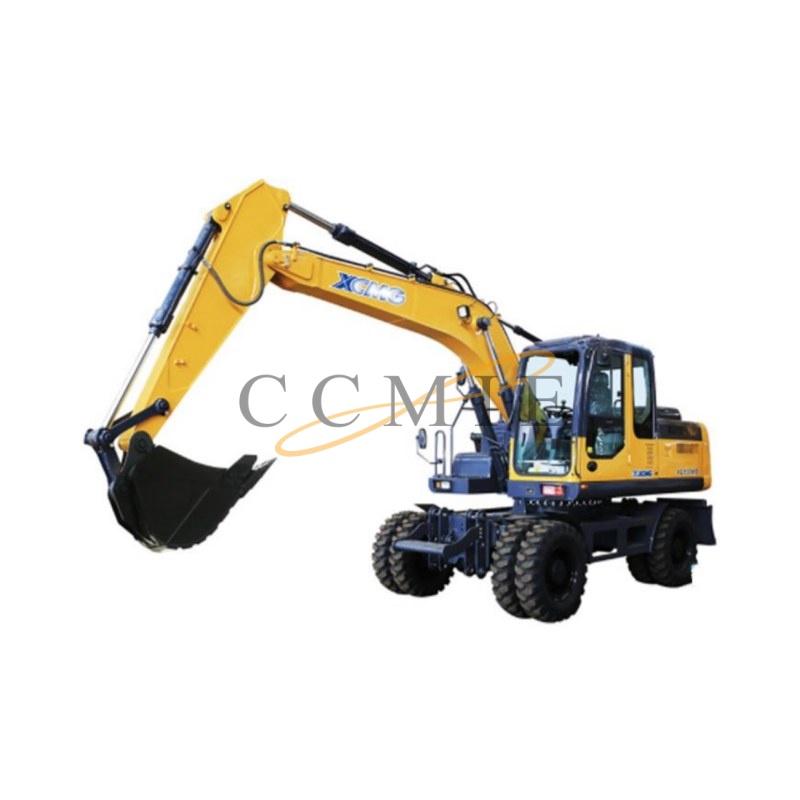
The XE210WA wheeled excavator is a 21-ton class wheeled excavator from XCMG, with an operating weight of approximately 20.2 tons. It is equipped with a Cummins 6B5.9 engine, with power ranging from 132kW to 135kW. Unlike tracked excavators, wheeled excavators rely on a suspension system to absorb road impacts during travel, while suspension locking or rigid supports ensure chassis stability during excavation operations. The XE210WA features a hydraulic suspension system, supplemented by outriggers or a dozer blade to enhance support rigidity during operation.
The excavator cylinder parts, part number 803071385, is installed between the left side of the chassis frame and the axle. It primarily performs three functions: bearing the weight of the machine body, filtering out driving bumps, and maintaining vehicle level in digging mode in conjunction with hydraulic locking. Because the left side is typically closer to the driver’s operating side and experiences higher off-center loads, the wear rate of the cylinder’s seals and piston rod guide sleeve is often slightly higher than that of the right side.
II. Structural composition and working principle of the left suspension cylinder of 803071385
803071385 belongs to the short-stroke excavator hydraulic cylinder category. Structurally, it can be categorized into four types: “who bears the pressure, who guides, who seals, and who connects.”
- Cylinder: A pressure vessel with an inner bore that has been honed to ensure the precision of the contact surface between the piston and the seals; once the inner wall is scratched, no matter how many times the seal is replaced, the oil will not be retained.
- Piston rod: Transmits road impacts into the cylinder for excavator. The surface is hard chrome plated and polished to ensure both wear resistance and corrosion resistance. The rod diameter determines the bending resistance, and bending after being subjected to lateral force is the most difficult damage to repair.
- Piston and combination seal: Separates the rod chamber and rodless chamber, is the primary source of internal leakage, and is also the part most frequently replaced during maintenance.
- Guide sleeve: It straightens the piston rod and bears lateral force. The seal and dust ring on it are responsible for preventing dirt from entering. Both are indispensable.
- Lugs and joint bearings: Connect the frame to the front axle, allowing for sway. Wear and tear on the bearings can create play, converting the lateral force originally borne by the hydraulic cylinders into an impact.
The working principle can be broken down into the terms “stiffness” and “damping.” The air chamber provides stiffness via the accumulator, determining whether the excavator hydraulic cylinder-Xcmg Excavator Spare Parts can support the vehicle body; the hydraulic fluid flowing through the damping orifice provides damping, determining how quickly or slowly the impact is absorbed. Both are independently adjustable, so “the vehicle body cannot be supported” and “obvious bumps” are often two different problems and cannot be attributed to a faulty hydraulic cylinder.
From the perspective of the overall machine condition, this cylinder has three working modes: when driving, damping and buffering intervene to isolate road impacts; during digging operations, the suspension lock-up valve locks the cylinder-Xcmg Excavatorparts into a rigid support to prevent the frame from floating due to digging reaction force; when stationary, it maintains the height and level of the vehicle body. Whether the switching between the three modes is crisp is itself an observation point for judging the state of the cylinder and valve assembly.
III. Typical Symptoms and Repair Recommendations for Left Suspension Cylinder Failure (803071385)
The failure of a suspension cylinder Xcmg Parts typically involves a gradual process from slight oil leakage to complete pressure loss.
Symptom 1: Abnormal vehicle posture
When parking on a flat, hardened surface, if the left front or left rear corner is significantly lower than the right side, and adjusting the outriggers does not restore it to a horizontal position, it usually indicates internal leakage caused by wear of the piston seal ring of the left suspension cylinder—the oil is “bypassing” between the rodless chamber and the rod chamber, and the cylinder cannot maintain its support rigidity.
Repair recommendations: First rule out accumulator and suspension valve block issues. If internal leakage is confirmed, prioritize replacing the piston sealing assembly rather than the entire cylinder. If the cylinder wall is visibly scored or has excessive ellipticity, cylinder boring or replacement of the entire assembly is required. After replacing the seals, a pressure test should be performed, and the vehicle height should be observed to ensure stability within a specified time.
Symptom 2: Excavator veers to one side and experiences increased bumps and jolting.
If the steering wheel tends to pull to the left while driving at medium speeds, or if the impact on the left side of the chassis feels noticeably harsher than on the right, it indicates that the damping and cushioning function of the hydraulic cylinder for excavator is weakening. In severe cases, scoring grooves may appear on the piston rod surface, further damaging the guide sleeve seal.
Repair recommendations: Inspect the piston rod surface for longitudinal scratches or plating peeling. Minor scratches can be polished and repaired, and the guide sleeve seal can be replaced. If the scratches have reached the base metal, the piston rod or the entire cylinder should be replaced. Also check the clearance between the left suspension tie rod and the ball joint to rule out any false misalignment caused by loose connections.
Symptom 3: External leakage marks on the left suspension cylinder of vehicle 803071385
During each shift change, check the connection between the excavator cylinder parts barrel and piston rod, as well as the area around the oil port connector, for any sludge buildup. Fresh leaks initially appear as a thin layer of moisture, which then adheres to dust and forms a dark sludge. If dripping oil marks appear below the cylinder barrel, the seal has failed and is in its later stages.
Maintenance Recommendations: For leaks at the oil port joint, first retighten to the specified torque and replace the combination gasket; if the leak is confirmed to be from the piston rod oil seal or guide sleeve O-ring, replace the seals as soon as possible to prevent continuous hydraulic oil loss, contamination of the chassis, and accelerated seal deterioration. During replacement, simultaneously check the honing texture of the cylinder inner wall for integrity.
The left suspension cylinder (803071385)-excavator hydraulic cylinder isn’t a major component on the XE210WA excavator chassis, but if it malfunctions, the machine will tilt and veer off course, affecting the accuracy of digging operations. Many operators are used to waiting until the cylinder completely loses pressure before stopping the machine to replace the part, but by then the piston rod or cylinder barrel has often worn down, resulting in higher repair costs. Taking an extra two minutes during shift changes to check if the machine is level and if there’s any sludge around the cylinder barrel and oil ports, and addressing any leaks or height differences as soon as possible, is always worthwhile. When purchasing spare parts, don’t just provide the part number; also provide the manufacturer’s serial number from the machine’s nameplate and any remaining markings from the old cylinder to the supplier. This will save you a lot of trouble with back-and-forth confirmations; and try to choose suppliers with quality traceability.
For other parts, please provide us with the part number or visit our related websites:
Click here to visit our spare parts web
Post time: Nov-10-2026