
The Hitachi ZX870H-3 is a mainstay model for heavy-duty mining operations, with a rated power of 397 kW (540 PS) and a working weight of approximately 82 tons. Equipped with a 4.5 m³ rock bucket, it is designed for high-intensity tasks such as stripping and loading. Within this large and sophisticated front-end working device, the bucket cylinder, though seemingly insignificant, directly determines the bucket’s opening and closing efficiency, full-bucket ratio, and overall machine uptime. 9281912 is the assembly part number for the bucket cylinder of this 87-ton excavator.
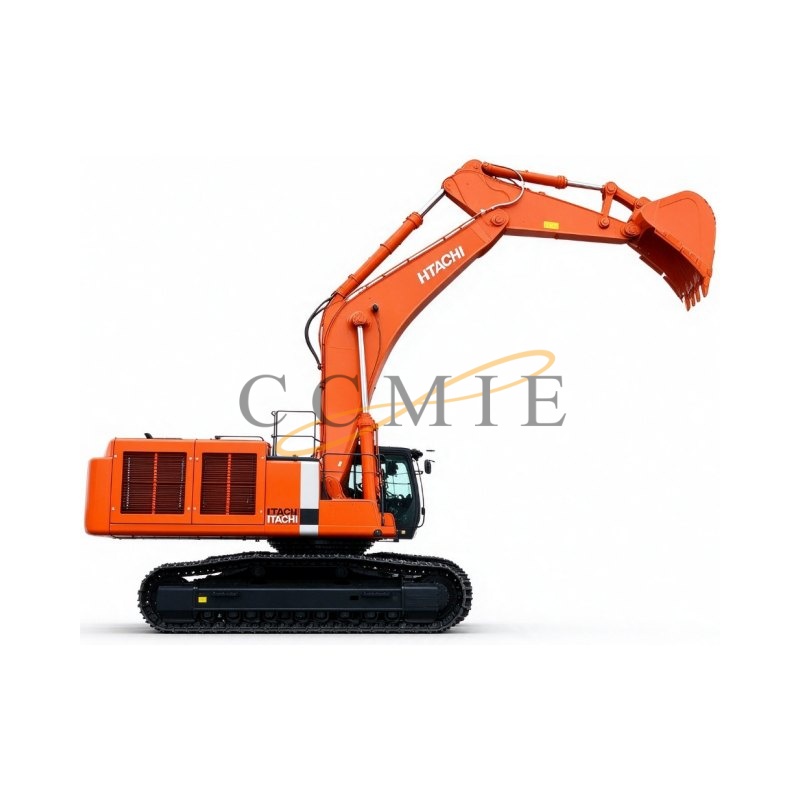
I. What is the 9281912 bucket cylinder?
9281912 is the part number for the bucket cylinder assembly in Hitachi’s parts system, corresponding to ZX870H-3 (including ZX870H(BE)-3 heavy-duty type). It is installed between the front end of the boom and the bucket connecting rod and is the actuating cylinder that drives the opening and closing of the bucket. When supplied as an assembly, it usually includes the cylinder barrel, piston, piston rod, sealing components, oil port connectors, and mounting lugs, and can be replaced as a whole upon arrival without the need for on-site disassembly and assembly.
There are two levels to distinguish here: 9281912 is the assembly-level number, while piston rods, sealing components, and oil ports are part numbers and need to be ordered separately according to the exploded view. When inquiring about prices, it is recommended to provide the whole machine model, the whole machine serial number, and the current front-end configuration, because the cylinders with different bucket capacities, different counterweights, and different boom types may have differences in installation distance, stroke, piston rod diameter, and oil port direction. Providing only a part number may easily lead to purchasing the wrong part or incompatibility.
II. Structural Principle and Function of 9281912 Bucket Cylinder
The bucket cylinder-Excavator Parts is a typical double-acting hydraulic cylinder, internally composed of a cylinder barrel, piston, piston rod, and sealing components. During operation, high-pressure oil enters through one port, pushing the piston to extend or retract the piston rod. This linear motion is then converted into the bucket’s tilting action via a linkage mechanism—oil enters the rod chamber to retract the bucket, while oil enters the rodless chamber to unload it. The cylinder’s output power depends on the cylinder diameter and system pressure, while the speed of action depends on the oil supply flow rate; both are controlled uniformly by the entire machine’s hydraulic system.
Its function extends far beyond simply “opening and closing the bucket.” During excavation, the bucket cylinder must withstand excavation resistance and impact loads to press the bucket into the material pile; when retracting the bucket, it provides sufficient compressive force to ensure no spillage when the bucket is full; and during unloading, it quickly resets, shortening each work cycle. In continuous loading operations in mines, the bucket cylinder-Excavator Spare Parts reciprocates multiple times per cycle, making it the most frequently used and most demanding of the three sets of cylinders at the front end. Therefore, manufacturers typically incorporate a buffer structure at the end of the stroke to reduce impact loads and noise, and extend the lifespan of seals and structural components.
III. Core Advantages of the 9281912 Bucket Cylinder
The original factory specification bucket cylinder has three core advantages.
High compatibility. The cylinder diameter, stroke, installation distance, and oil port direction are all set according to the machine drawings, so there is no need to modify pipes or holes or adjust the connecting parts on site, reducing adaptation and rework.
It has good durability. The chrome plating on the cylinder inner wall and piston rod is designed for heavy-duty working conditions, and the sealing components can withstand high pressure and dust, and can adapt to continuous full-load operation. These are the most important indicators for front-end components in mining.
Maintaining economic efficiency. Assembly replacement does not require on-site cylinder disassembly, minimizing downtime; fault diagnosis is also more direct, with oil leaks, power loss, and creeping issues being quickly located, facilitating advance planning of maintenance schedules.
For mining users, uptime is cost. If the front-end hydraulic cylinder-Excavator Spares leaks oil or loses power, the entire machine often has to be stopped for repairs. The losses from a single unplanned downtime often exceed the price of the parts themselves.
IV. Fault scenarios and maintenance suggestions for the 9281912 bucket cylinder
In heavy-duty scenarios such as loading and stripping, common failures of bucket cylinders fall into four categories:
a. Oil leakage. This is mostly caused by aging seals or scoring of the piston rod. If it is a minor external oil leak, the sealing assembly can be replaced first; if there are obvious scratches on the rod body or the chrome plating is peeling off, the rod or the entire assembly must be replaced, as simply replacing the seal will not solve the problem.
b. The excavator moves weakly or crawls slowly. This could be caused by internal leakage in the hydraulic cylinder, insufficient system pressure, or a malfunctioning main valve. In this case, the pressure should be measured first before deciding whether to disassemble the cylinder, to avoid misdiagnosing a hydraulic system problem as a damaged hydraulic cylinder.
c. Abnormal noise and vibration from the hydraulic cylinder-Excavator Parts Online. This is usually caused by a failure in the system’s air intake or buffer. In this case, it is necessary to first bleed the air, and then check whether there is any scoring on the inner wall of the cylinder and whether the buffer device is working properly.
d. Wear on the cylinder pin and lug. This is often caused by excessive clearance, resulting in uneven load and accelerating seal damage. When this occurs, the pin, bushing, and lug should be inspected simultaneously during disassembly and replaced if necessary.
The maintenance recommendations can be summarized in four points: Before disassembly and inspection, perform a pressure test to locate the fault using the data; when replacing the assembly, check the hoses, connectors, and pins simultaneously to avoid secondary faults; after assembly, vent the air, slowly extend and retract the assembly several times under no-load before applying a load; during the trial run, focus on observing whether the rod end seal and oil port are leaking.
V. Daily Maintenance of 9281912 Bucket Hydraulic Cylinder
Routine inspections should focus on three areas: whether the piston rod surface is covered with dust and hard particles, whether there is oil leakage between the oil port and the rod end seal, and whether the pin is lacking grease. Once the rod body is scratched by hard particles, the seal will be quickly damaged, so the exposed parts of the rod body should be cleaned regularly.
For maintenance, regularly check the cleanliness of the hydraulic oil and the condition of the filter element according to the machine maintenance manual. Oil contamination is the main source of cylinder scoring and seal failure. Clean the rod body after each shift to reduce dust entering the cylinder with the rod. When storing for a long time, retract the piston rod to reduce the exposed area.
One last piece of advice: Don’t delay if you notice minor oil leaks. The cost of replacing the seal early is far lower than the cost of replacing the entire assembly after the shaft is damaged. Proactive inspection and maintenance are the most effective ways to reduce costs.
9281912 refers to the Hitachi ZX870H-3 bucket cylinder assembly, specifically designed for heavy-duty excavation and earthmoving operations in mining. When purchasing, in addition to verifying the part number, it is also necessary to confirm the machine’s serial number and bucket configuration to avoid compatibility issues. Prioritize using parts that meet manufacturing standards to reduce the risk of oil leaks and internal leakage. Regularly clean the piston rod of sand and gravel, periodically check the hydraulic oil and seals, and promptly repair any minor leaks. Proper maintenance can reduce unexpected downtime, extend cylinder life, ensure stable excavator operation, and reduce mining operation and maintenance costs.
For other parts, please provide us with the part number or visit our related websites:
Click here to visit our spare parts web
Click here to visit our alibaba (There are more kinds of products)
Post time: Nov-04-2026